Guide
What Does a Home Inspector Actually Check? A Complete Arkansas Buyer's Checklist
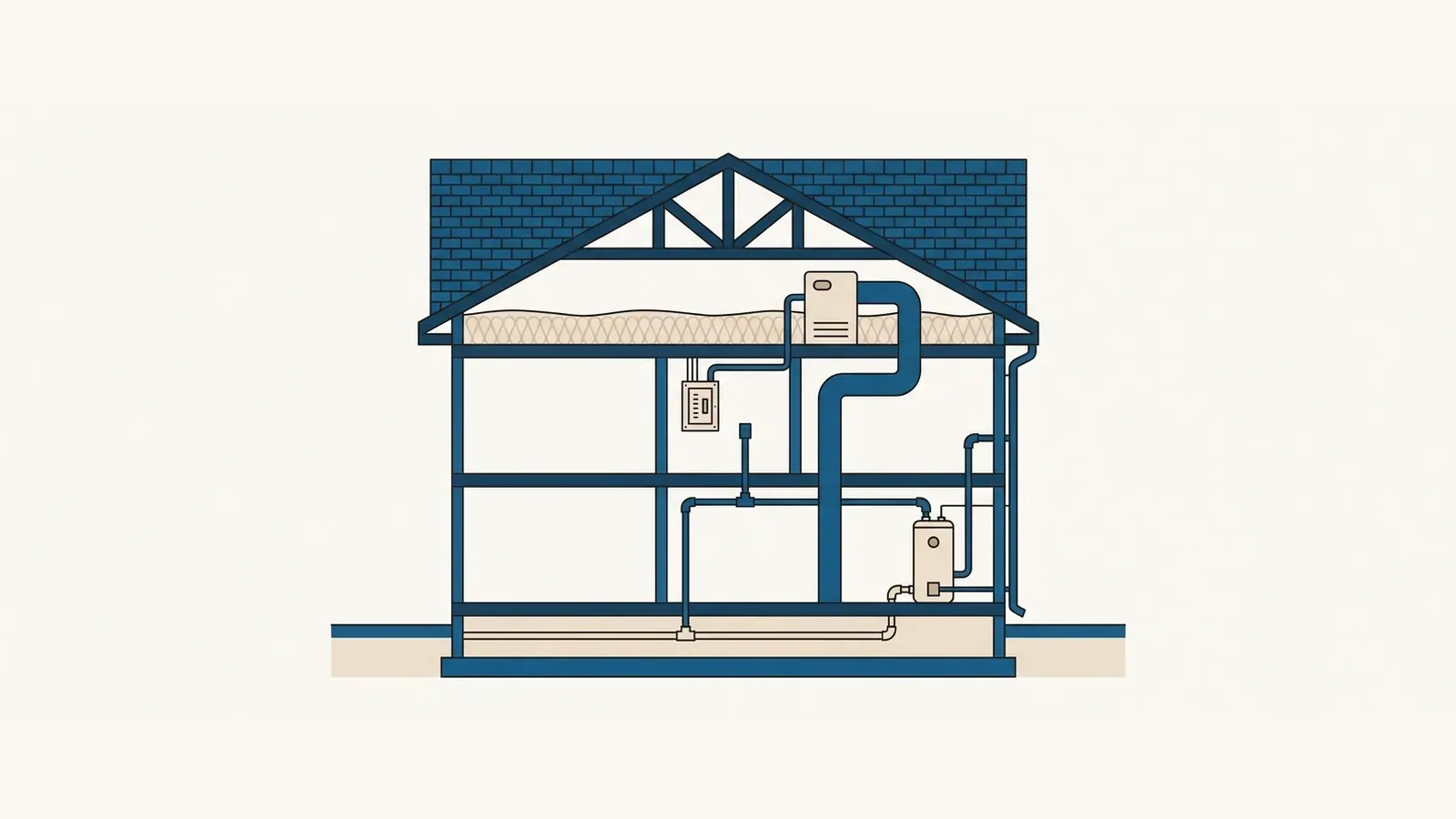
If you've never been through a home inspection, the whole thing can feel like a mystery. You hire someone to walk the house for two or three hours, and they hand you a report a day or two later. Then you're trying to work out whether what they found is a deal-breaker, a negotiation point, or a footnote.
Here's what we check during a home inspection in Arkansas, system by system, and what the findings mean when you're making a decision against a closing deadline.
One note up front. A home inspection is a visual evaluation, not a teardown. We don't open up walls, we don't run cameras through sewer lines, and we don't operate equipment that isn't already running. What we do is give you a photo-documented picture of the property as it stands the day we walk through, and that picture is usually enough to surface the issues that matter most for a buyer.
The Roof
We usually start outside. The roof gets more attention than almost any other single system. Two reasons. Roof problems are among the priciest things to fix after closing, and Central Arkansas roofs work harder than most. Hail, high winds, heavy rain, and long stretches of intense summer heat all leave their marks, and not all of those marks show from the ground.
We get on the roof when it's safe. We look at shingle condition, meaning lifting, cracking, granule loss and missing tabs, and we check flashing around chimneys, vents, skylights and any other roof penetrations. Valleys get a close look. That's where water concentrates, and it's where damage shows up first. We also probe for soft spots in the decking, and weigh the visible age of the roof against the service life it has left.
Steep pitch, slick conditions or recent rain can make walking a roof a bad idea, so we work from the gutters with binoculars, and from inside the attic, where the underside of the roof tells its own story. Either way, every finding gets photographed.
Roofing is one of our deeper specialty areas. In this climate, it shows in what gets caught.
The Attic
The attic is where roof problems, venting issues and insulation gaps all become visible. We check insulation depth and condition. We check venting: intake at the soffits, exhaust at the ridge or gable vents, then signs of past or active roof leaks, the framing, and any wiring or plumbing running through the attic space.
Arkansas attics get extreme. Summer temperatures up there regularly cross 130 degrees, so undersized venting or pinched insulation costs you on the energy bill and puts strain on the HVAC.
The Exterior
We walk the whole perimeter. The building shell gets looked at from outside: siding condition, paint and seal around windows and doors, and the part of the foundation we can see, meaning cracks, settlement and water staining. Then grading and drainage around the house. Gutters and downspouts get a look too, and the question there is whether they move water away from the home or just dump it at the base. Decks and porches count too. So do attached structures.
Drainage gets less credit than it deserves around here. Arkansas clay soil swells when wet and shrinks when dry, and homes with poor drainage end up with foundation movement, crawlspace moisture and water getting in, all of it tracing back to one cause: water going where it shouldn't.
The Structure and Foundation
We look at the structure from outside and inside. Foundation walls we can see. Cracks, and whether they look cosmetic or structural. The floor system where we can reach it, signs of settlement or movement, and the condition of any load-bearing parts in view.
We can't see behind drywall. Signs of structural movement usually show up elsewhere in the home anyway: doors that won't latch, sloping floors, drywall cracks at corners, trim pulling apart. We flag those and tie them to what we're seeing in the structure.
The Crawlspace
If the home has a crawlspace, we go in. That's not an optional step for us. It's one of the most important parts of an Arkansas inspection, because the crawlspace is where a lot of the priciest hidden problems start. Wood rot, mold, pest activity, plumbing leaks, HVAC damage, vapor barrier failure.
We check the floor system from underneath. We look at the vapor barrier, if there is one, and the insulation between the joists, then signs of moisture or standing water, pest activity, and the shape of any plumbing or HVAC equipment running through the space.
If an inspector skips the crawlspace, or just sticks a head in at the access door, the space under the house didn't get inspected. This is one of the places where a shortcut costs a buyer the most after closing.
Electrical
We open the main panel and any sub-panels. We're looking at wiring practice, breaker condition, and signs of overheating or corrosion. Double-tapped breakers get flagged. So does aluminum branch wiring, which is a live concern in some 1960s and 1970s Arkansas homes, and so does grounding that isn't right.
Around the house, we test a sample of outlets and switches. We check GFCI protection in kitchens, bathrooms, garages and exterior outlets, and we look at visible wiring runs for safety issues. We surface what affects safety, function or insurance.
Plumbing
We look at the water supply lines we can see: copper, PEX, galvanized, polybutylene. Drain and waste lines get the same. Then the water heater, meaning age, condition, venting and pressure relief, plus the fixtures through the house and the water pressure.
We run the water. We fill sinks and tubs and flush toilets. Then we look for leaks under cabinets, around the water heater, and anywhere plumbing connects.
What we don't do is sewer line scoping. That's a separate specialty service. It takes a camera and a sewer line specialist. If the home is older, has trees over the sewer line, or has shown signs of drainage backup, we'll recommend you bring in a sewer scope specialist as a separate inspection.
HVAC
This is another of our deeper specialty areas. Central Arkansas summers put cooling systems under continuous load for months at a time, and a system that's "working" in April may not hold up in July.
We check the age and condition of the system, then run it: cooling in cooling weather, heat in heating weather. Refrigerant lines get checked for damage or bad insulation. So does the condensate drain, which is a common failure point in this climate. We look at ductwork where we can reach it, at the air handler and condenser unit, and at the filter.
We also flag deferred maintenance. A seller may not have disclosed it, and a system nobody has touched in years can still run on the day of the inspection and still be near the end of its life.
The Interior
Inside, we go room by room. Walls, ceilings and floors get looked over for damage, water staining, movement, or anything else that's out of place, and we open and close windows and doors, check the seals and look for damage. Fireplaces and chimneys get checked where we can reach.
In the kitchen, we test the built-in appliances that come with the home: range, oven, dishwasher, built-in microwave, garbage disposal, vent hood. Cabinets and countertops get checked for damage. We run the sink. In the bathrooms, we run every fixture, look for leaks, check tile and grout, and test the vent fan.
What We Don't Inspect
Buyers sometimes assume a few services come with a standard home inspection. They don't. We don't perform radon testing, sewer line scoping, pool and spa inspections, well or septic system inspections, mold testing, lead paint or asbestos testing, or termite and wood-destroying organism reports.
If you need one of these, we'll tell you. We can point you toward specialists in Central Arkansas who handle each one, and some of them we'll coordinate as subcontracted specialty services if you want them bundled with your inspection.
After the Inspection: Your Report
Your report lands within 48 hours of the inspection. Every finding comes with photographs. It's organized by system, and each item says what we found, why it matters, and which category it falls into: safety concern, function issue, end-of-life, maintenance item, or cosmetic.
What we don't do in the report is tell you whether to buy the house; that's your decision and your real estate agent's territory. What we do is give you the information clearly enough that the decision becomes obvious.
After the report is delivered, we stay available. Most clients have questions a day or two later, once they've had time to read through it. Give us a call. We'd rather spend 20 minutes on the phone clearing up a finding than have you make a major decision on a misunderstanding.
The Bottom Line
A home inspection isn't a guarantee that nothing will ever go wrong with the house. It's a clear snapshot of the property's condition on the day we walk through, aimed at the systems that matter most and the issues most likely to cost you money down the road.
In Arkansas, where summers are punishing and homes deal with everything from severe weather to clay soil, that snapshot matters more than people sometimes realize. The goal isn't to scare buyers away from properties. It's to give you the information you need to walk into closing with confidence, knowing exactly what you're getting into.
If you're under contract on a home in Central Arkansas and want to get scheduled, call or text us at (501) 499-7154.
Ready to book an inspection?
Call or text David at (501) 499-7154, or send a request and he will get back to you.