Guide
Why Central Arkansas Roofs Take a Beating, and What an Inspection Catches
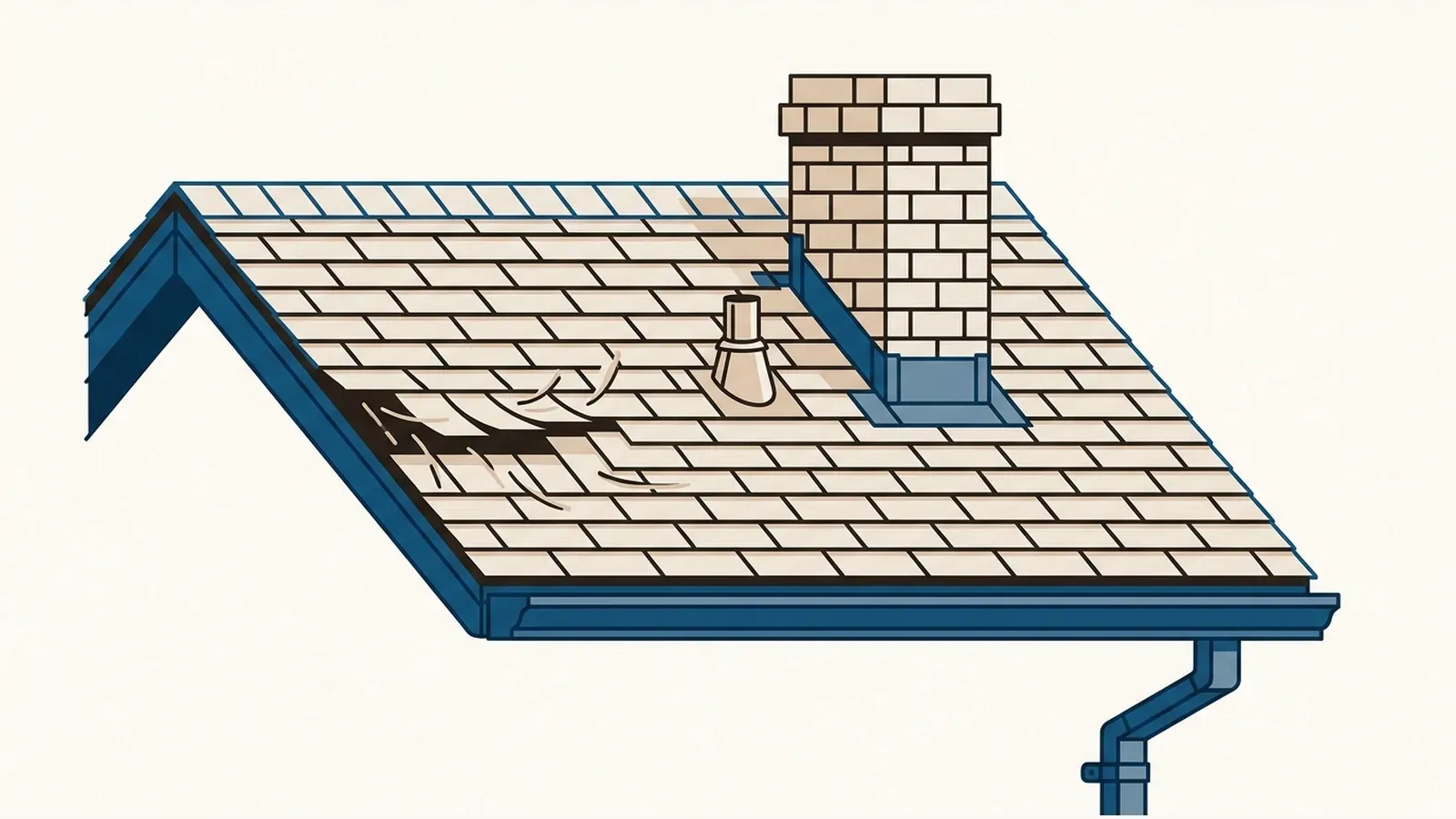
Ask anybody who's owned a house in Central Arkansas for a few years. You'll get a roof story. A spring hail line that came through one neighborhood and skipped the next street over. A wind event that peeled shingles off the same rake edge on four houses in a row. A slow leak nobody found until a stain showed up on a back bedroom ceiling in October.
The roof takes more weather than any other part of the house. It's also the part a buyer sees least. You can walk a home for an hour, look at every cabinet and closet, and never once look up. That gap is why the roof gets so much attention during an inspection.
Here's what this climate does to a roof, part by part, and what an inspection can and can't tell you about it.
What Makes Central Arkansas So Hard on Roofs?
Four things. They arrive in a familiar order through the year. Hail in spring. High wind riding the same storm systems. Heavy rain that finds every weak seam. Then months of hard summer heat that ages the material faster than the calendar does.
| Weather stress | What it does to the roof | Where it shows up first |
|---|---|---|
| Hail | Bruises the shingle mat and knocks granules loose | Soft metals: vent caps, flashing, gutter faces |
| High wind | Breaks the seal strip, lifts and creases tabs, tears tabs off | Rake edges, ridge caps, the windward slope |
| Heavy rain | Finds gaps at flashing, valleys and penetrations | Valleys, chimney and vent flashing, the attic underside |
| Summer heat | Cycles and dries the material, curling, blistering, split sealant | South and west slopes, exposed sealant at flashing |
None of that means a roof is in trouble. It means a roof around here has a history, and the point of looking closely is to read that history instead of guessing at it.
What Does Hail Actually Do to a Roof?
Hail harms an asphalt shingle two ways. It bruises the mat under the surface and it knocks the protective granules loose, and the part that matters usually isn't visible from the driveway.
Those granules aren't decoration. They're the layer that shields the asphalt from sunlight. Where hail strips them, the bare asphalt starts aging faster than the rest of the roof. A bruise is a soft spot in the mat that can open up later, even though the shingle looks fine today. That's why hail findings get photographed at specific slopes and specific impact points, rather than written up as a general note that the roof saw a storm.
The soft metals on a roof often say more than the shingles do. Vent caps, gutter faces, downspouts, drip edge, and the fins on an outdoor air conditioning unit dent visibly when shingles hide the same impact. Find a pattern of fresh dents in soft metal. That changes how carefully the shingle field gets read.
Two things are worth knowing as a buyer. First, hail lands in narrow bands. The house you're buying can have real damage while the one across the street has none, so a neighbor's opinion isn't evidence. Second, an inspection documents observed condition. It doesn't settle an insurance claim. If the findings point that way, an adjuster and a roofing contractor are the people who scope and price it.
What Does High Wind Do to a Roof?
Wind damage is mostly a sealing problem. Asphalt shingles are held down by an adhesive strip that warms in the sun and bonds each course to the one below it. Once wind breaks that bond, the shingle can lift, crease, and eventually leave.
A creased tab is the finding people underestimate. Wind folds the shingle back, the shingle lays down again when the storm passes, and from the ground the roof looks untouched. The crease is a permanent weak line through the mat. It tends to be where the next failure starts.
The places wind gets its grip are predictable: rake edges along the gable ends, eaves where the starter course does the work, ridge caps that sit fully exposed, and any spot where an earlier repair left shingles unsealed. Missing tabs are obvious. Lifted and unsealed tabs aren't, and they're the reason wind driven rain can get under a roof that looks fine.
Overhanging limbs belong here too. They scuff granules off in normal weather and puncture decking in a storm.
Where Does Heavy Rain Actually Get In?
Almost never through the middle of a shingle slope. Water gets in at the transitions, which is why flashing gets more attention than the field of the roof.
The usual suspects are the same on most houses: valleys where two slopes concentrate runoff, step flashing and counterflashing at a chimney, the rubber boot around a plumbing vent, roof to wall intersections, skylights, and old satellite or antenna mounts left behind by a previous owner. Those boots crack and split with age, and they're one of the most common leak sources on an otherwise sound roof. Add exposed nail heads that somebody covered with caulk years ago, because caulk is a maintenance item and not a permanent detail.
Drainage counts as part of the roof. Gutters that are full, pitched wrong, or dumping straight down at the foundation move a roof problem into a crawlspace and foundation problem, and that costs a lot more to fix. An inspection follows the water from the roof covering to the gutters and downspouts and out to the grading around the house.
Then there's the underside. The attic is where a roof gives itself away: staining on the decking, rusted nail tips, delaminated or soft sheathing, daylight where daylight shouldn't be, and old repairs made from inside. A dried out leak still leaves a mark.
What Does the Long Summer Heat Do?
Heat ages a roof faster than anything else on this list, and it does it quietly, with no storm to blame it on.
Every summer day the roof surface expands in the sun and shrinks overnight, over and over for months. Asphalt gives up its volatile oils in that cycle. The material gets brittle. On the roof that looks like curling at the shingle edges, blistering, cracking, and granule loss that has nothing to do with hail. It shows up first on the south and west slopes, because those take the longest exposure. Sealant and caulk at flashing details shrink and split on the same clock.
The attic drives a lot of this from below. Attic temperatures run well above the outdoor air in summer, and a roof with poor intake ventilation at the soffits or blocked exhaust at the ridge bakes from both sides at once. That's why insulation depth and ventilation are part of a roof review and not a separate topic. It also shows up on your power bill and in how hard the air conditioning has to work. David sees that connection quickly, because his background is in HVAC systems and roofing.
What Does an Inspector Actually Look At Up There?
The covering, the transitions, the edges, the penetrations, the drainage, and then the whole thing again from underneath in the attic.
- Shingle condition: lifting, creasing, cracking, curling, blistering, granule loss, missing tabs, and any patchwork from earlier repairs.
- Flashing at chimneys, walls, skylights, valleys, and every vent or pipe that comes through the roof.
- Ridge caps, rake edges, eaves, drip edge, and exposed or backed out fasteners.
- Decking condition where it can be observed, including soft or spongy areas underfoot.
- Gutters, downspouts, and where the water ends up when it leaves them.
- The attic side: decking staining, nail tips, sheathing condition, framing, insulation, and ventilation.
Not every roof can be walked. Steep pitch, a slick surface, brittle material, or decking that already feels unsound are all reasons to stay off. From there the roof gets read from a ladder at the eave, with binoculars, and from inside the attic. The report tells you which method was used.
Want the system by system version of the whole walkthrough? It's laid out in what a home inspector actually checks. Roofing is one of the areas that most often drives expensive surprises, so on a residential inspection it gets an experienced eye and photographs rather than a glance from the driveway, and the findings land in a photo-rich report delivered within 48 hours.
Can an Inspection Tell You How Many Years the Roof Has Left?
No. An inspection reports the observed condition of the home on the day of the inspection. It's not a warranty and not a guarantee, and it isn't a grade.
An inspector can describe what's there and how it compares to what that material normally looks like at various stages of wear. What an inspector can't do is promise you a number of years. A roof that looks sound on a clear Tuesday can be damaged by the storm that comes through Thursday, and a roof showing real wear can keep shedding water for a good while yet. A home inspection isn't a guarantee that nothing will ever go wrong with the house.
What you get instead is more useful than a prediction. A plain description of each finding, photographs of it, and where it falls between a safety concern, a functional issue, end of life, a maintenance item, and something cosmetic. Need a repair scope with a dollar figure attached? That's a roofing contractor's estimate, and it's a different document written for a different purpose. Questions like this one are collected on the FAQ page.
What Do You Do With a Roof Finding?
Three paths, and buyers use all of them. Ask the seller to repair it before closing. Ask for a credit and handle it on your own terms afterward. Or get a roofing contractor out for a scope and a number while you still have room to negotiate.
Whichever way you go, verify the work. Don't take a receipt on faith. That's what a re-inspection is for: a flat $200 to return and confirm every item was corrected properly, giving you peace of mind before closing. More on when that's worth doing in what a re-inspection is.
Timing matters here. A roof finding usually needs a contractor to look at it before you can price it, and contractors are busy after the same storms that caused the damage. Booking early in your inspection period leaves room for that second step; what to expect from a home inspection in Conway walks through how the schedule usually lines up. On the selling side, if you'd rather find the roof issues before a buyer's inspector does, that's the case for an inspection before you list.
Does Any of This Change for Other Buildings?
Yes. On a few property types the roof is the main reason to inspect at all.
A brand new roof isn't automatically a correct roof. Flashing formed wrong at a wall, a missing kick-out at the end of a roof to wall run, improper fastening: those are exactly what a punch list catches while the builder is still the one paying to fix it. That's the argument in do you need an inspection on a brand new house, and the reason new construction inspections exist.
Manufactured and mobile homes use different roof geometry and materials than a site built house. The details that leak are different too. That's covered in what is different about inspecting a manufactured home.
Detached garages, shops, and barns take the same weather as the house. They usually get a fraction of the maintenance. They're often in worse shape than the roof you were actually worried about. See should you inspect the shop, barn or detached garage.
Low slope commercial roofs behave differently again. Membranes, seams, internal drains, and parapet flashing replace shingles and valleys as the things that matter, and that's part of what a commercial property inspection covers.
Get the Roof Looked At Properly
Under contract in Central Arkansas and the roof is the part keeping you up? Call or text David at (501) 499-7154, or send a note through the contact page. Ark Inspections is a licensed and insured inspection service serving Conway and 143 cities and towns. Home base is Conway, and we cover 15 Central Arkansas counties, from Little Rock to the smaller towns in between; properties beyond a two-hour drive require a callback for a custom quote, and the full county list is on the service area page. Hours are Monday through Friday, 8 AM to 5 PM, and you talk to David, the person who inspects your home.
Ready to book an inspection?
Call or text David at (501) 499-7154, or send a request and he will get back to you.