Guide
Do You Need an Inspection on a Brand New House in Arkansas?
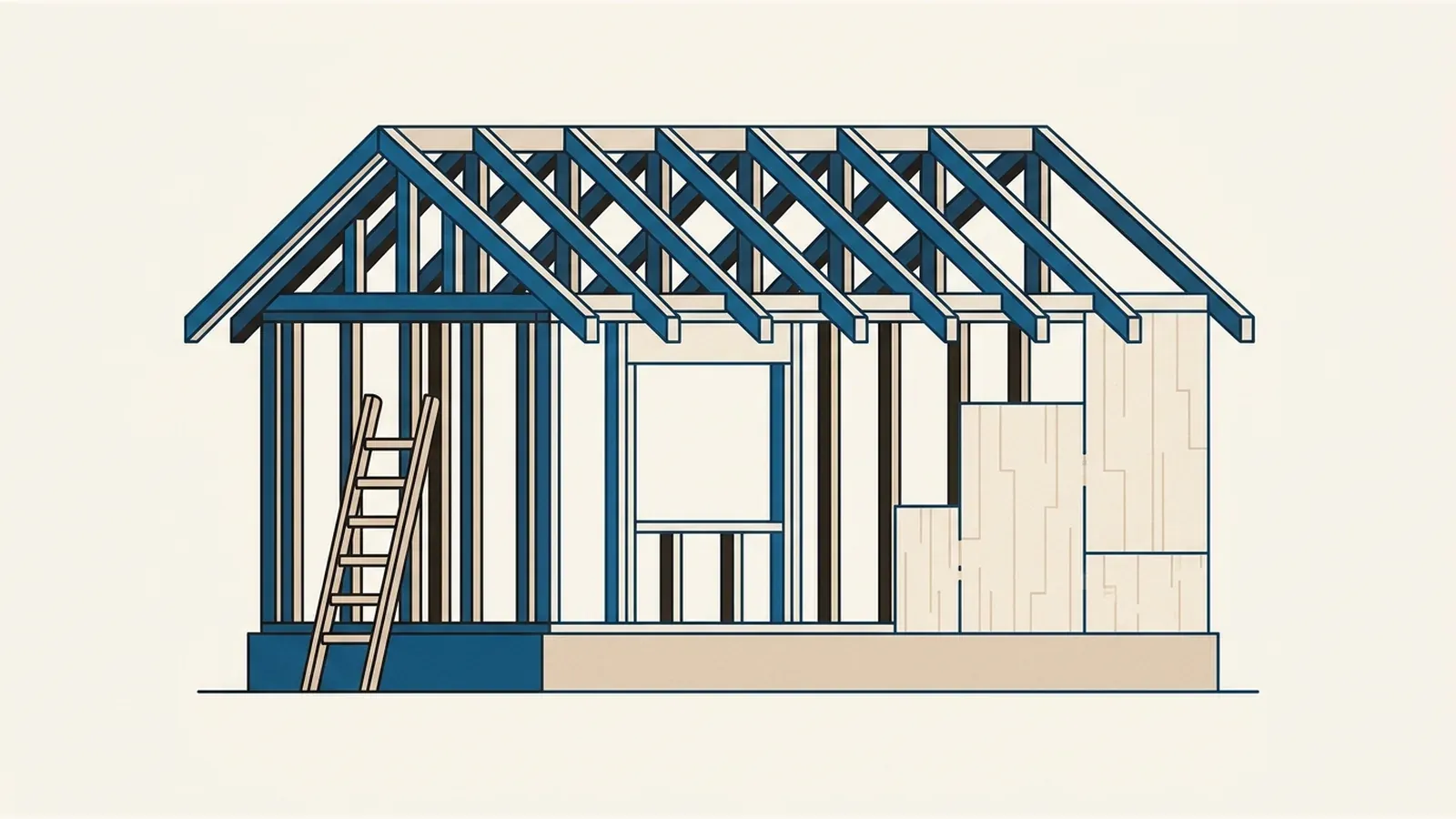
The short answer is yes. You're buying a house nobody has ever lived in. The paint is fresh, the appliances still have film on the doors, and the city or county has already signed off on the permits. So why pay someone to walk through it?
Because a new house isn't automatically a finished house. It's a big project, put together by a lot of different people, in stages, outdoors, over several months. Framers finish and move on. Electricians come and go. The HVAC crew runs ductwork before the drywall crew closes the walls behind it. Everybody's doing their part, and the builder is running all of it while the weather does whatever it wants. Things get missed. Not because anyone is careless, but because that's what happens on a job with that many hands.
An inspection isn't an accusation against your builder. It's a list. Most builders would rather have the list before you move in than a phone call about a wet ceiling in February.
Do you actually need an inspection on new construction?
Yes, and the reason is timing. A new build is the easiest house to fix and the hardest one to argue about later. While the crews are still on site and the job is still open, a defect is a work order. After closing, once the trucks have moved to the next subdivision, that same defect turns into a phone call, a scheduling problem, and sometimes your own bill.
That's the whole argument. It has nothing to do with new homes being bad. The window where problems are cheap to fix is short, and it closes the day the builder walks away.
Hasn't the house already been inspected?
It has, but for a different purpose. Building inspections by the city or county check the work against the building code at set milestones, and the code is a minimum standard, not a finish standard. What gets reviewed, and when, varies from one city or county to the next. The process in one place isn't always the process in the next one over.
A private inspection answers a different question. What shape is this house in today, from the point of view of the person about to own it? The two reviews overlap in places. They aren't substitutes for each other. One is about the code. The other one is about you.
What actually turns up on a brand new house?
Mostly small things, plus the odd item that would have cost real money if nobody caught it. Here's the kind of thing that shows up on a house nobody has lived in yet:
- Attic insulation missing or thin over interior walls and drop ceilings, or blown away from the corners
- Bath fans venting into the attic instead of outside
- Ductwork disconnected, crushed, or unsealed where it meets the boot
- A condensate line draining somewhere it shouldn't
- Missing flashing at roof-to-wall intersections, or kickout flashing left off entirely
- Nails, shingle offcuts, and debris left on the roof or sitting in the gutters
- GFCI protection missing at an exterior or garage outlet, or a hot and neutral reversed
- A drain line under a sink never fully tightened. Nobody notices until somebody uses the sink
- A water heater relief line ending in the wrong place
- Doors that stick, windows that won't lock, a stair rail with more give than it should have
- Grading that slopes toward the foundation instead of away from it, or downspouts dumping water at the corner of the slab
None of that is exotic. None of it means somebody did a bad job. It's ordinary, and all of it is far easier to fix in the first week than in the third year. Drainage is worth watching. Soils that hold water swell when they're wet and shrink as they dry, and a foundation feels the difference. A house that sheds water poorly on day one will keep bringing the subject up.
Roofs deserve their own mention. A roof can be brand new and still have a detail put in wrong, and the parts that fail first are usually the parts nobody sees from the driveway. There's more on that in why Central Arkansas roofs take a beating.
When during the build is an inspection worth doing?
There are four natural points, and you don't have to use all of them. Most buyers pick one or two, based on where the house is when they get involved.
| Phase | When it happens | What it looks at |
|---|---|---|
| Foundation | Before the slab is poured or the foundation is backfilled | Footings and reinforcement, plumbing rough-in below the slab, vapor barrier, site drainage |
| Pre-drywall | After framing and rough electrical, plumbing and HVAC, before insulation and drywall close the walls | Framing and fasteners, duct runs, wiring, drain and supply lines, window flashing, the underside of the roof deck |
| Final | Once the house is finished and the systems run, before your walkthrough with the builder | Everything operating: HVAC, the electrical panel, fixtures, roof, attic, doors and windows, grading and drainage |
| End of the first year | Before the end of your first year in the house, and before any builder coverage period ends | Settlement cracks, doors out of alignment, grading that has shifted, anything that only appears after a full cycle of Arkansas seasons |
If you can only do one, pick the pre-drywall review. It's the one moment when the structure, the wiring, the plumbing, and the ductwork are all visible at the same time. Once the drywall goes up, all of that sits behind a wall for the life of the house, and anything about it is an educated guess from then on.
The final review is the one most people think of, and it earns its place too. By then the house is running, so equipment can be tested instead of looked at. That's the same visual, hands-off review we'd do on any house, and it's laid out system by system in what a home inspector actually checks.
Was the house already finished when you found it? A final inspection still tells you what's there. Plenty of buyers walk into a completed spec home with no idea what happened during the build.
Many builders cover certain items for a period after closing. Ask yours what that period includes and the exact date it ends, then work backward. An inspection a month or two before that date gives you time to hand over a written list while it still counts.
Does the builder's own walkthrough cover this?
Partly, and it's worth doing. The builder walkthrough is usually about what you can see and point at: paint, scuffs, a scratched door, a missing switch plate, caulk lines. That list matters and it generally gets handled.
What it usually isn't is a systems review. Nobody on that walkthrough is opening the electrical panel, climbing into the attic to measure insulation depth, testing every GFCI, or checking that the bath fan vents outdoors instead of into the insulation. That's a different job. Bring both.
What a new construction inspection is not
It isn't a verdict on the house or a review of your builder. An inspection reports the condition of the home on the day of the inspection. It's not a warranty and not a guarantee, and it isn't a grade. It gives you the facts in plain language so you can decide with confidence.
It's also not a code ruling. An inspector isn't the code official, and the report doesn't replace the city or county inspection or override anything in it.
And it isn't a promise that nothing will ever go wrong with the house. Houses move. Materials settle. The first year of any home comes with a short list of adjustments, and that's normal. What the report does is tell you what's there now, in writing, so nothing on that list shows up as a surprise later.
How a new construction inspection works with Ark Inspections
David does the inspection himself. Ark Inspections is a licensed and insured inspection service, and the new construction inspection is punch-list style: it catches defects during construction phases so the builder fixes them on their dime, not yours. You talk to David, the person who inspects your home.
New construction inspections are a custom quote. The scope depends on the size of the house and which phase you want reviewed. The new construction service page has the details. Want published pricing for a standard home inspection? The residential schedule is laid out in what a home inspection costs in Arkansas.
If the builder works through your punch list and you want the fixes confirmed before closing, that's a re-inspection. For a flat $200 we come back and confirm every item was corrected properly. The re-inspection page explains how that visit works.
Got a detached garage, a shop, or a barn on the property? Those are separate structures and they can be added on. That's covered in should you inspect the shop, barn or detached garage.
Home base is Conway. We cover 15 Central Arkansas counties and 143 cities and towns, from Little Rock to the smallest of them. Properties beyond a two-hour drive are welcome with a callback for a custom quote, and the full list of counties and communities is on the site. David works Monday to Friday, 8 AM to 5 PM. Other questions about scope and scheduling are answered on the FAQ page.
The bottom line
A brand new house is a good thing to buy. It's also a project that a lot of people touched in a lot of stages, and the point of an inspection isn't to find fault with any of them. It's to hand you and your builder one clear, photographed list while the list is still easy to work through.
Building or under contract on a new house in Central Arkansas? Call or text David at (501) 499-7154 or send the details through the contact page. Tell him where the build is and what stage it's reached, and he'll tell you what's worth scheduling and when.
Ready to book an inspection?
Call or text David at (501) 499-7154, or send a request and he will get back to you.